Case Study
Medium-Deep High-Deviation Well CCUS & Electric Heating Composite Lifting
Overcoming 8,031 mPa·s viscosity and CO₂ corrosion, reducing average daily power consumption per well by 2,040 kW·h.
Published on: June 2025
The Value
RMB 126,100
Comprehensive cost savings per well per year
13.09%
Daily oil production increase per well
2,040 kW·h / 97.14%
Daily power reduction / overall energy savings
+37%
System efficiency improvement
At a Glance
Location
Inner Mongolia, China
Oilfield / Plant
Zhongyuan Oilfield – Inner Mongolia
Well Conditions
Medium-deep high-deviation well (pump setting inclination 66°), pump depth 995 m
Recovery Process
Electric heating + CCUS
The Challenge
High viscosity, high-deviation wear and extreme power consumption — multiple bottlenecks constraining CCUS heavy oil development
High Viscosity, Pump Entry Difficulty
Comprehensive water cut of 89%, sand content of 0.3%, and degassed crude dynamic viscosity of 8,031 mPa·s. Wellbore temperature fluctuates with fluid supply; at low temperatures, crude viscosity rises, making pump entry difficult and production volumes low.
High-Deviation Wear, Short Cycles
Constrained by 66° well deviation, severe rod-tubing wear leads to short pump inspection cycles and frequent maintenance.
Extreme Power Consumption, Low Heat Utilization
Electric heating-assisted rod pumping results in extremely high power consumption and operating costs. Unable to switch injection-production without pulling tubing, leading to low thermal utilization.
The Solution
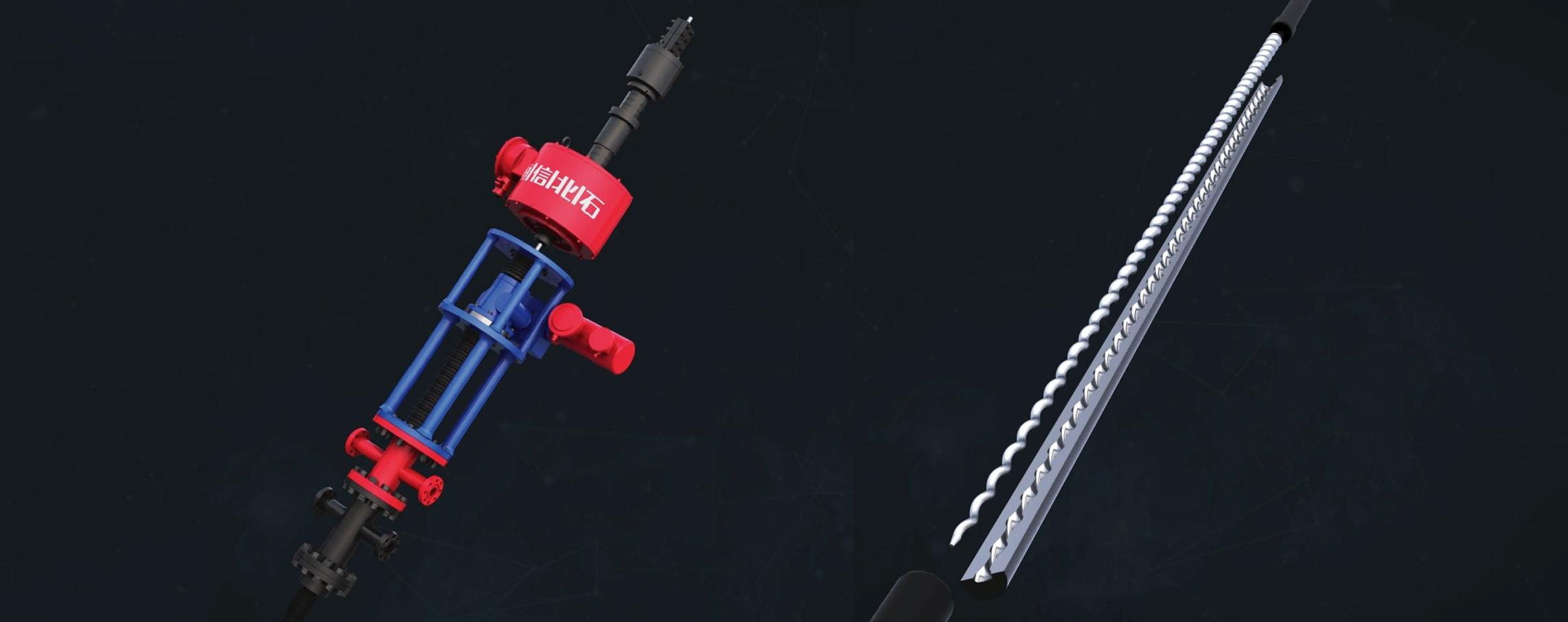
HXBS deployed the IntelliCPCP® Intelligent Tapered Progressing Cavity Pump System
A combined hardware-software approach that comprehensively upgrades the lifting process, targeting the multiple production bottlenecks under CCUS and electric heating conditions.
Leverages the superior adaptability of progressing cavity pumps for heavy oil, significantly reducing electric heating usage and energy consumption. Also enables injection-production integration without pulling the tubing string.
Supports remote monitoring and automatic parameter tuning (e.g. auto pump efficiency adjustment); highly integrated surface facilities with a small footprint significantly reduce daily maintenance frequency.
Systems Used
Systems & Equipment Used