Case Study
Medium-Deep High-Deviation Well Electric Heating & CO₂ Huff-and-Puff Composite Lifting
Overcoming 8,031 mPa·s viscosity and CO₂ corrosion, reducing average daily power consumption per well by 2,040 kW·h.
Published on: June 2025
The Value
RMB 389,900
Comprehensive cost savings per well per year
13.09%
Daily oil production increase per well
2,040 kW·h / 97.14%
Daily power reduction / overall energy savings
+37%
System efficiency improvement
At a Glance
Location
Inner Mongolia, China
Oilfield / Plant
Zhongyuan Oilfield – Inner Mongolia
Well Conditions
Medium-deep high-deviation well (pump setting inclination 66°), pump depth 995 m
Recovery Process
Electric heating + CO₂ huff and puff
The Challenge
High viscosity, high-deviation wear and extreme power consumption — multiple bottlenecks constraining heavy oil development with electric heating and CO₂ huff-and-puff
High Viscosity, Pump Entry Difficulty
Comprehensive water cut of 89%, sand content of 0.3%, and degassed crude dynamic viscosity of 8,031 mPa·s. Wellbore temperature fluctuates with fluid supply; at low temperatures, crude viscosity rises, making pump entry difficult and production volumes low.
High-Deviation Wear, Short Cycles
Constrained by 66° well deviation, severe rod-tubing wear leads to short pump inspection cycles and frequent maintenance.
Extreme Power Consumption, Low Heat Utilization
Electric heating-assisted rod pumping results in extremely high power consumption and operating costs. Unable to switch injection-production without pulling tubing, leading to low thermal utilization.
The Solution
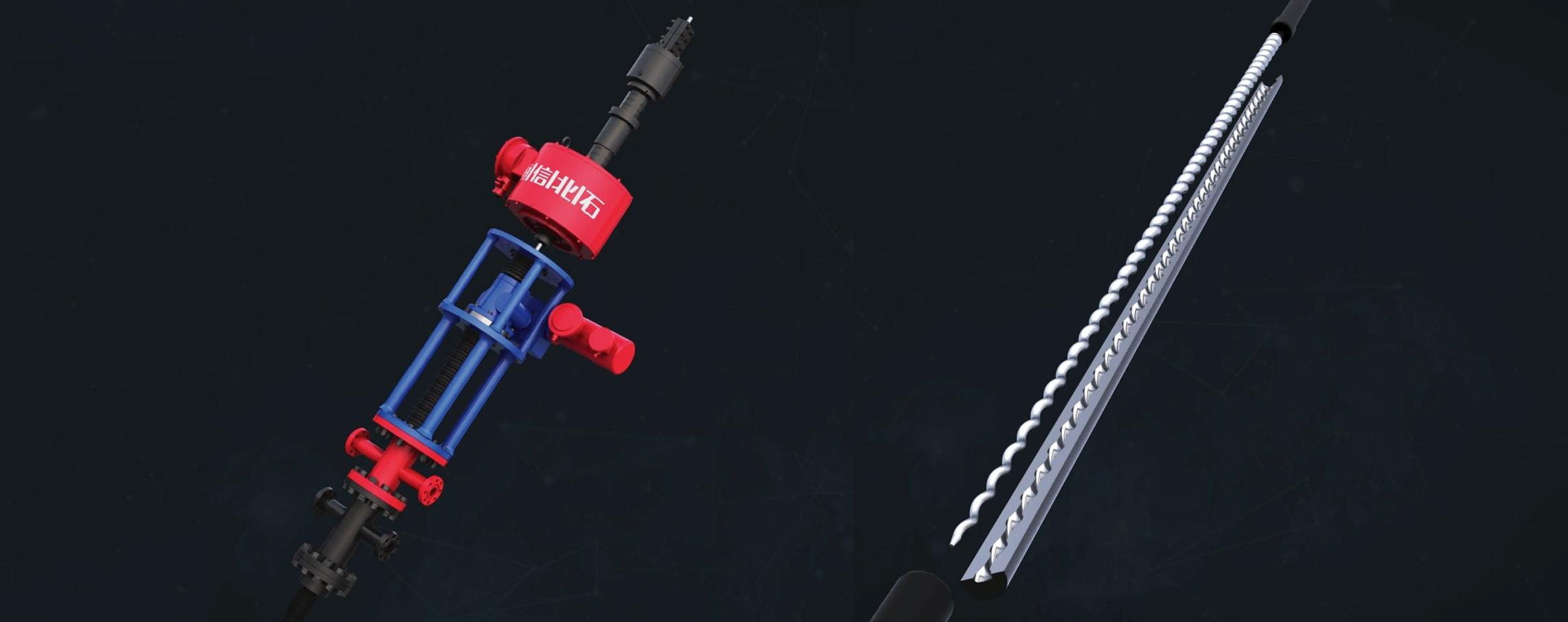
HXBS deployed the IntelliCPCP® Intelligent Tapered Progressing Cavity Pump System
A combined hardware-software approach that comprehensively upgrades the lifting process, targeting the multiple production bottlenecks under electric heating and CO₂ huff-and-puff conditions.
Leverages the superior adaptability of progressing cavity pumps for heavy oil, significantly reducing electric heating usage and energy consumption. Also enables injection-production integration without pulling the tubing string.
Supports remote monitoring and automatic parameter tuning (e.g. auto pump efficiency adjustment); highly integrated surface facilities with a small footprint significantly reduce daily maintenance frequency.
Systems Used
Systems & Equipment Used