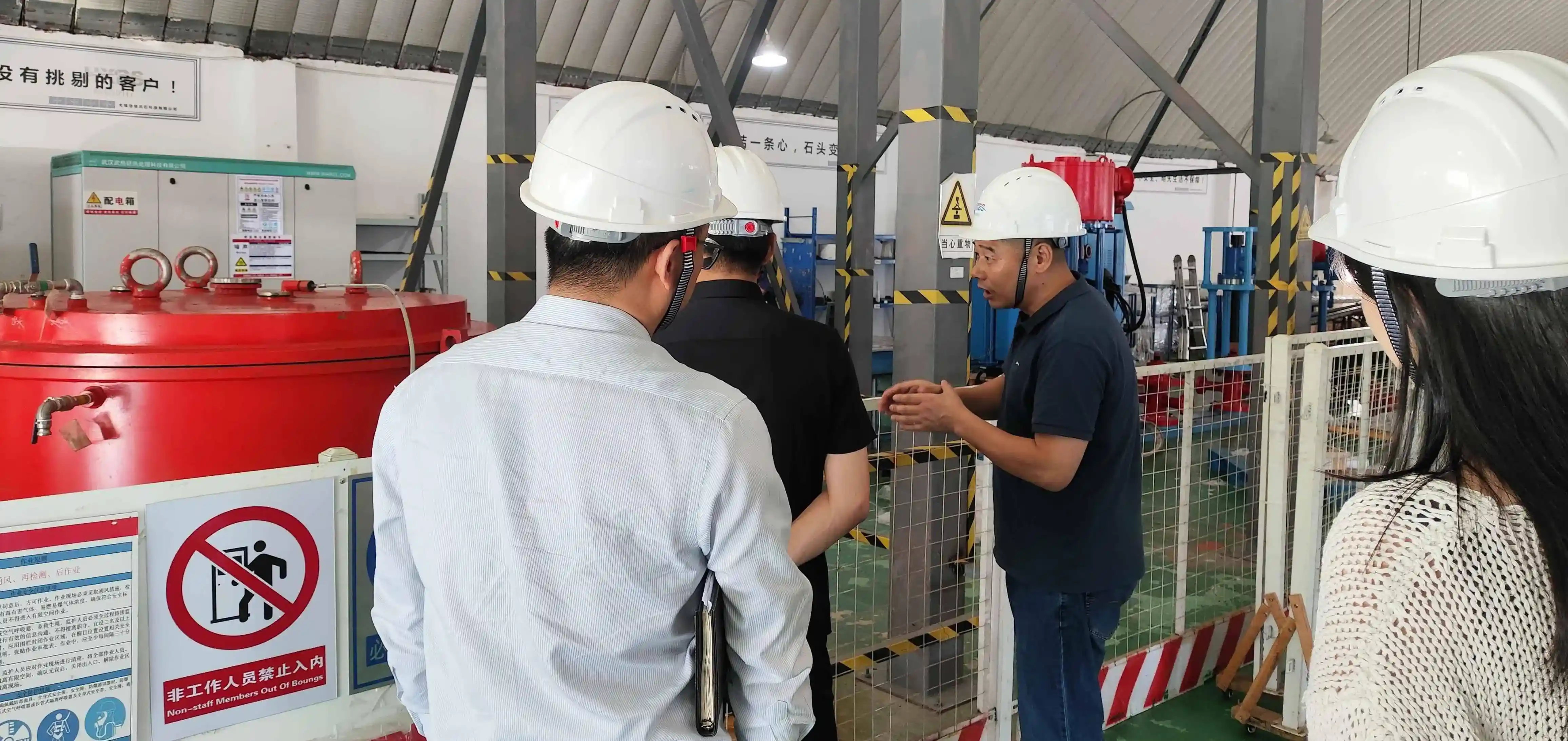
How to Choose a High Temperature PCP Manufacturer for Thermal Heavy Oil

Published: Apr 06, 2026

Introduction: Why High Temperature PCPs Matter

Heavy oil thermal recovery has become a critical pathway for unlocking vast in-place reserves that cannot flow under primary cold production. Cyclic steam stimulation (CSS) and steam-assisted gravity drainage (SAGD) expose downhole equipment to extreme temperatures, aggressive fluids, and severe thermal cycling, which directly impacts artificial lift reliability.

In this environment, choosing the right high-temperature progressive cavity pump (PCP) manufacturer is one of the most important decisions an operator can make. A fit-for-purpose high temperature PCP not only stabilizes production and improves the Oil-Steam Ratio (OSR), but also reduces workovers and steam costs over the full life cycle of a thermal project

What Is a High Temperature PCP?

A progressive cavity pump is a positive displacement pump composed of a helical rotor rotating inside a matching stator cavity, creating sealed cavities that move fluid from intake to discharge as the rotor turns. Conventional PCPs for oil production often rely on elastomer-lined stators, which limit temperature capability and are prone to blistering, hardening, and rapid degradation under thermal conditions.

By contrast, a high temperature PCP for thermal heavy oil recovery is engineered to handle sustained bottomhole temperatures up to the 300–380°C range, extreme viscosity, high sand content, and often high gas-oil ratios (GOR). High temperature PCPs such as all-metal conical designs can operate reliably at bottomhole temperatures up to 380°C and lift ultra-heavy crude with viscosities up to 20,000 mPas at 50°C, while maintaining stable volumetric efficiency.

Typical operating envelopes for leading high temperature PCP systems include:

  • Maximum BHT: up to 380°C

  • Viscosity: up to 20,000 mPas at 50°C

  • Production: roughly 10–70 m³/d (about 62–440 bbl/d) at 100 rpm

  • Setting depth: up to 1,500 m

  • Deviation: up to 80° in high-angle and horizontal wells.

Technical Challenges in Thermal Heavy Oil Wells

CSS and SAGD wells impose a combination of thermal, mechanical, and chemical challenges that can quickly destroy conventional artificial lift systems. When steam is injected at 300–380°C, cycles of heating and cooling cause repeated expansion and contraction of downhole components, generating thermal fatigue and seal failures.

Key failure drivers include:

  • Thermal cycling and elastomer damage: High temperatures and rapid temperature shifts can blister, crack, and permanently deform elastomer stators, leading to loss of pump sealing and volumetric efficiency.

  • Corrosive, abrasive production: Heavy oil reservoirs often contain corrosive components plus high sand cuts, which cause severe wear on rotors, stators, and production strings and can lead to pump sticking and sand burial.

  • Rod-tubing wear in deviated wells: In highly deviated and horizontal sections, rod buckling and complex dynamics accelerate rod-tubing wear, shortening run life and increasing failure frequency.

These challenges mean that a high temperature PCP manufacturer must go beyond simply providing a pump; the entire system design, metallurgy, geometry, and automation must be engineered specifically for thermal heavy oil duty.

Core Criteria for Selecting a High Temperature PCP Manufacturer

Temperature and Materials Capability

The first filter in evaluating any high temperature PCP manufacturer is the system’s verified temperature and materials capability. For thermal heavy oil fields, operators should look for:

  • Proven maximum BHT ratings up to 380°C with documented performance in CSS and SAGD-like operations.

  • High-strength, corrosion-resistant alloys for all critical components, including stator, rotor, drive head, and wellhead sealing assemblies.

All‑metal, elastomer‑free PCP designs are particularly important in long-cycle thermal wells. A system such as an all-metal conical PCP creates a dynamic metal-to-metal seal using specialized surface hardening and geometries, eliminating elastomer blistering and significantly improving high temperature endurance.

Pump Geometry and Volumetric Efficiency

Beyond material limits, pump geometry strongly affects efficiency, sand tolerance, and run life. Advanced conical rotor-stator geometries allow:

  • Radially synchronized dynamic clearance adjustment, where reduced clearance maximizes lifting efficiency and increased clearance creates larger channels for sand flowback and steam or chemical injection.

  • Reduced hard-start torque and lower risk of startup failures by allowing clearance to be increased for soft-starts from surface.

Manufacturers that offer dynamic clearance adjustment systems are able to actively compensate for wear and thermal deformation, preserving volumetric efficiency and extending mean time between failures (MTBF) throughout the thermal project.

Artificial Lift System Integration

A high temperature PCP should not be an isolated downhole pump; it is far more effective as part of an integrated artificial lift system. Important system-level elements include:

  • Intelligent variable speed drives (VSDs) and surface controllers that coordinate pump speed, torque, and axial movement of the rod string.

  • Purpose-designed surface drive heads that can raise and lower the rod string under load to support sand flowback, steam injection, and dynamic pump efficiency optimization.

Such integration enables advanced capabilities such as integrated injection and production without pulling tubing, which significantly reduces downtime and steam cycle disruption in thermal wells.

Reliability, MTBF, and Field Track Record

For thermal heavy oil assets, MTBF and overall run life are more critical than any single short-term efficiency metric. Operators should assess:

  • Documented maximum run life and average MTBF in comparable CSS, SAGD, and hybrid EOR projects.

  • Measurable results such as increased annual oil production per well, improved water recovery, and OSR gains after upgrading to the manufacturer’s PCP system.

For example, IntelliCPCP® deployments in Sinopec-operated heavy oil blocks have achieved maximum run lives exceeding 50 months and MTBF increases on the order of years, while improving OSR and reducing steam and workover costs.

Sand Management and Rod-Tubing Wear Mitigation

Sand remains one of the main causes of PCP sticking, accelerated wear, and premature failures in heavy oil wells. A capable high temperature PCP manufacturer should offer:

  • Custom-engineered sand control assemblies at the pump intake, with configurable screens, micron ratings, and metallurgical options to match reservoir conditions.

  • Built‑in anti-sand burial and anti-reverse rotation mechanisms, as well as automatic pull-up functions to release sand-induced sticking events.

In deviated and horizontal wells, rod-tubing wear mitigation becomes just as important. Integrated systems like RodSavior® dynamically regulate axial tension and rod loads, minimizing helical buckling and maintaining an optimal rod-tubing contact force along the wellbore. This significantly extends rod and tubing service life and allows deeper pump setting in highly deviated profiles.

Digitalization and Remote Optimization

Thermal heavy oil operations benefit greatly from digitalization, particularly when fields are remote or require frequent cycle adjustments. When evaluating manufacturers, operators should examine:

  • Availability of intelligent VSDs and control platforms that support real-time monitoring of torque, speed, axial position, and downhole conditions.

  • Algorithm-based optimization systems capable of adjusting pump speed and clearance to match changing reservoir conditions and to prolong injection–production cycles.

Manufacturers that integrate remote monitoring and analytics can help operators reduce the frequency of onsite interventions, detect early warning signs of failure, and maintain wells in an optimal operating window over the full thermal cycle.

Standards, Safety, and Service Capability

Finally, a high temperature PCP manufacturer must demonstrate robust quality, safety, and service capabilities. Key indicators include:

  • Certifications such as ISO 9001/14001/45001, compliance with relevant API practices, and proven HPHT wellhead sealing technologies with explosion-proof ratings for surface equipment.

  • A strong service network, including field engineering teams, commissioning support, training programs, and lifecycle operations and maintenance (O&M) strategies tailored to thermal heavy oil fields.

Manufacturers that provide end-to-end services—consulting, engineering analysis, application-specific customization, and 24/7 remote monitoring—are better positioned to sustain performance in complex thermal projects.

HXBS as a Benchmark High Temperature PCP Manufacturer

Company Overview and Focus on Thermal Heavy Oil

Wuxi Hengxin Beishi Technology Co., Ltd. (HXBS) is a specialized artificial lift provider focusing on advanced PCP technology for heavy oil and complex wells. The company has built its portfolio around the demands of thermal heavy oil recovery, offering integrated solutions that address high temperature, high sand cut, and high deviation environments.

HXBS combines in-house R&D, manufacturing, and field services to deliver complete artificial lift systems rather than standalone pumps. This integrated approach allows HXBS to tightly coordinate pump technology, digital control, and field execution, which is particularly valuable for CSS, SAGD, and hybrid EOR schemes.

IntelliCPCP® All-Metal Conical PCP System

At the core of HXBS’s offering is the IntelliCPCP® Intelligent Conical PCP Artificial Lift System, featuring the FERROXIS all-metal conical PCP. This elastomer-free design uses a patented conical stator-rotor geometry and advanced surface hardening to form a dynamic metal-to-metal seal, maintaining high volumetric efficiency even under extreme thermal conditions.

Key system components include:

  • FERROXIS all-metal conical PCP: Engineered for BHT up to 380°C, lifting ultra-heavy crude up to 20,000 mPas at 50°C with a production range of 10–70 m³/d and setting depths up to 1,500 m with deviations up to 80°.

  • DAGS™ Dynamic Clearance Adjustment System: Allows surface-adjustable rotor-stator clearance for wear compensation, volumetric efficiency optimization, and sand/scale flushing.

  • Synergix® Intelligent VSD and controller: Integrates sensors, VSD, and HMI to enable intelligent control, soft-starts, and remote monitoring for multiple wells.

  • DynaRL Drive System: A surface drive head capable of raising and lowering the rod string under high axial load while maintaining rotational speed, supporting sand flowback and integrated injection-production operations.

  • THERMOLOCK® wellhead sealing: Proprietary HPHT sealing mechanism providing safe, automated sealing integrity during steam injection.

  • Graspos balancing assembly and RodSavior®: Systems that control rotor-stator clearance and dynamically mitigate rod-tubing wear in high-angle and horizontal wells.

Together, these elements establish IntelliCPCP® as a complete, high temperature PCP system tailored to the realities of thermal heavy oil recovery.

Proven Field Results in Thermal Heavy Oil

HXBS has deployed IntelliCPCP® systems across multiple Sinopec-operated heavy oil production plants in China, including shallow and medium-deep extra-heavy oil CSS wells and unconventional hybrid EOR projects. Across these deployments, the system has delivered:

  • Maximum run life exceeding 50 months and average MTBF increases on the order of 2 years and 11 months, extending MTBF by roughly 325 days in certain blocks.

  • System efficiency increases up to 23%, annual crude oil production gains exceeding 220 t per well in some cases, and significant improvements in water recovery and OSR.

  • Cumulative energy savings and cost reductions equivalent to hundreds of thousands of USD across project portfolios.

These results demonstrate how a high temperature PCP manufacturer with specialized system design and strong field support can transform the economics of heavy oil thermal recovery.

Practical Selection Checklist for Operators

For operators evaluating high temperature PCP manufacturers for CSS, SAGD, or hybrid EOR projects, the following checklist can be used during technical clarification and bid evaluation:

  1. Temperature & Materials

    1. Is the system rated up to the required BHT (e.g., 350–380°C) with references in similar thermal projects?

    2. Are the stator/rotor and critical components built from high-grade alloys with proven corrosion and thermal fatigue resistance?

  2. Pump Geometry & Efficiency

    1. Does the pump feature advanced geometries (such as conical stator-rotor) and dynamic clearance adjustment to maintain volumetric efficiency over time?

    2. Are hard-start torque and sand-induced sticking risks mitigated by design?

  3. System Integration

    1. Is the PCP supplied as part of a fully integrated system including drive head, intelligent VSD, and control software?

    2. Can the system support integrated injection and production without pulling tubing?

  4. Reliability & Track Record

    1. What are the documented MTBF and run life statistics in wells with similar depth, deviation, viscosity, and steam conditions?

    2. Are there quantified case studies showing OSR improvement, incremental oil, and reduced steam or workover costs?

  5. Sand & Wear Management

    1. Does the manufacturer offer customizable sand control and automated anti-sand burial functions?

    2. Are there proven rod-tubing wear mitigation technologies for high-angle and horizontal wells?

  6. Digitalization & Remote Support

    1. Are intelligent monitoring, optimization algorithms, and remote diagnostics available as standard?

    2. Is there a centralized O&M strategy with 24/7 monitoring and rapid field response?

  7. Standards & Services

    1. Does the manufacturer hold relevant ISO certifications, explosion-proof ratings, and HPHT wellhead sealing qualifications?

    2. Is there a dedicated field engineering team and training program to support long-term thermal operations?

Using this checklist, operators can systematically compare vendors, de-risk thermal heavy oil projects, and align artificial lift decisions with long-term production and cost objectives.

Conclusion and Next Steps

Selecting a high temperature PCP manufacturer is a strategic decision that directly shapes the performance, reliability, and economics of thermal heavy oil assets. Manufacturers that combine all‑metal high temperature PCP technology, advanced pump geometries, integrated artificial lift systems, and digital lifecycle support deliver the greatest value in CSS, SAGD, and hybrid EOR environments.

HXBS, through its IntelliCPCP® Intelligent Conical PCP Artificial Lift System, provides a compelling benchmark for operators seeking to upgrade their thermal heavy oil artificial lift with a 380°C-rated, high-integration, digitally enabled solution. To learn more about IntelliCPCP®, detailed specifications, and case studies, operators can explore the official HXBS website at hxbsglobal.com/en and engage directly with HXBS technical teams for field-specific evaluations.

If you would like, the next step can be to adapt this article for a specific landing page layout on hxbsglobal.com/en, including suggested internal link anchors and section headings optimized for on-site UX and conversions.